Learning of RO Membranes in Reverse Osmosis Water Purifiers.
Guangzhou VOCEE Membrane Technology is committed to clarify the main elements of modern day water purification. The RO membrane is the essential component of any reverse osmosis (RO) water purifier as it is the key to the provision of clean, safe drinking water. This paper explores the nature of RO membranes, their operation and some main considerations toward the performance and durability of RO membranes.
The fundamental Law: Selective Permeation.
An RO membrane is a semi-permeable barrier that is meant to sift out an unbelievably great percentage of pollutants in water. It functions under pressure employing the law of selective permeation. The water molecules are minute in size to pass through microscopic pores of the membrane, whereas dissolved salts, minerals, heavy metals, bacteria, viruses, and organic molecules are effectively rejected and eliminated. This is a more specific method than the basic filtration which separates the substances down to a molecular scale to provide clean water.
Major Definitions of a Quality RO Membrane.
Not every RO membrane is produced equally. Their effectiveness relies on a number of issues:
Rejection Rate: This refers to the efficiency of the membrane to extract certain total dissolved solids (TDS) and it is normally expressed in percentage. Membranes of high performance are able to reach a rejection of 98 percent or more of salts such as sodium chloride.
Flux: This is the volume of purified water that is generated per unit area of membrane per time (e.g., gallons per day). It affects the capacity of the system.
Material and Construction: The vast majority of commercial RO membranes consist of thin-film composite (TFC) polyamide. The material is very stable, it has high rejection and is resistant to biological degradation. The membrane is designed to spiral-wound to increase the surface area at a small size so that it is more efficient in residential and commercial applications.
RO System an Integration and Synergy.
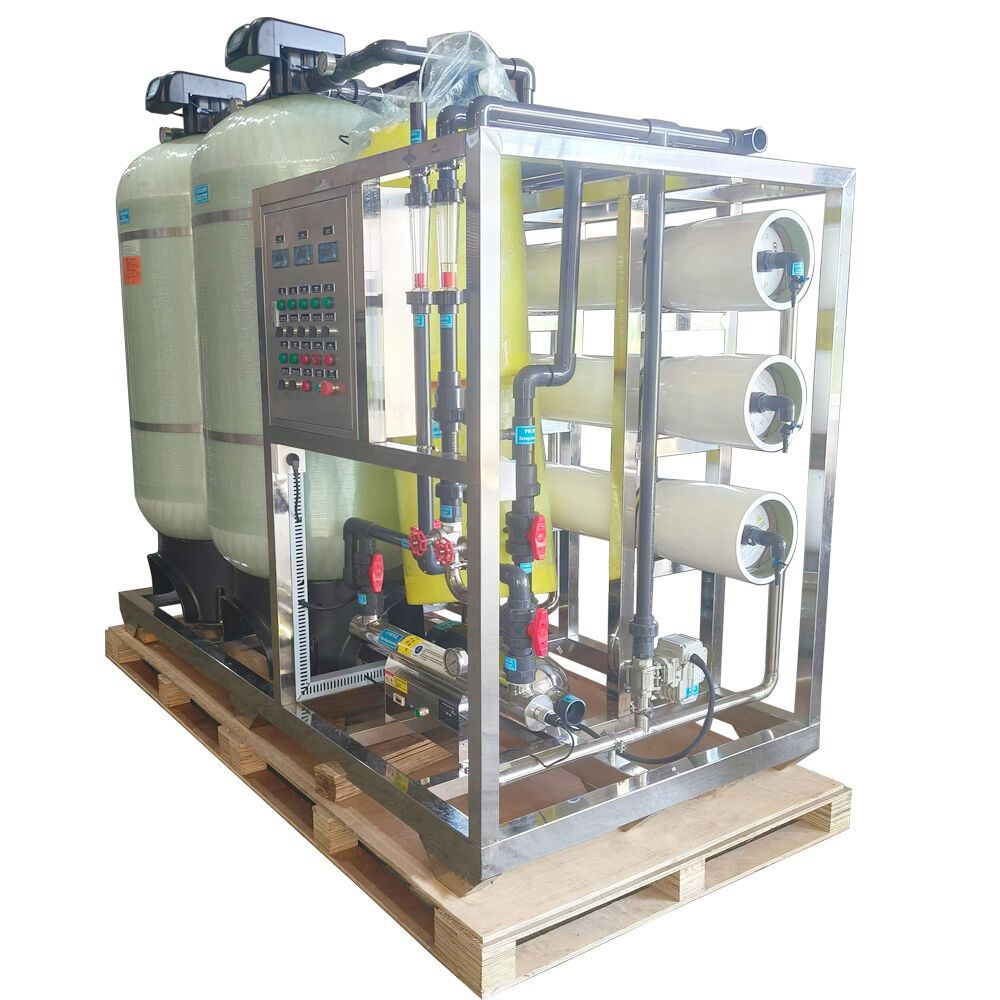
The performance of the RO membrane is sustained by a complete system. The pre-treatments such as sediment and activated carbon filters are generally used to shield the membrane against chlorine (which may ruin polyamide films) and particulates. Filtering of the water may then follow. In a system such as that we will develop at VOCEE, all parts are optimized so that the RO membrane runs in optimal capacity, balancing the recovery of water, energy conservation and the life of the membrane.
Improving the Best Practices and Workforce.
Not all RO membranes are created equally. It is important to know the quality of the water source. As an example, it is possible that water containing a high scaling potential (high hardness) needs some pre-treatment softening in order to keep the membrane intact.
Maintenance is crucial. Eventually, despite pretreatment, pretreatment may foul or scale membranes and this decreases flux and rejection. It is necessary to monitor the pressure in the system, the water quality (TDS), and flow rate regularly. It will be economical and healthy in the long run as it will allow service life of the membrane to be extended by manufacturers of the filters and regular professional sanitization so that the bottled water will be pure and that the system will be economical, which would be 2-5 years.
Conclusion
The RO membrane is a wonder of Science as it transforms the ordinary tap water into a purified product. Its advanced design and accurate functioning are the basis of high purity standard which is a basic necessity in present-day society. We use our knowledge in membrane technology to design RO systems at Guangzhou VOCEE that would explore the full capacity of these membranes to give efficient and cost effective applications of water treatment. Knowledge of this essential product assists the user to make appropriate decisions towards effective and sustainable purification of water.