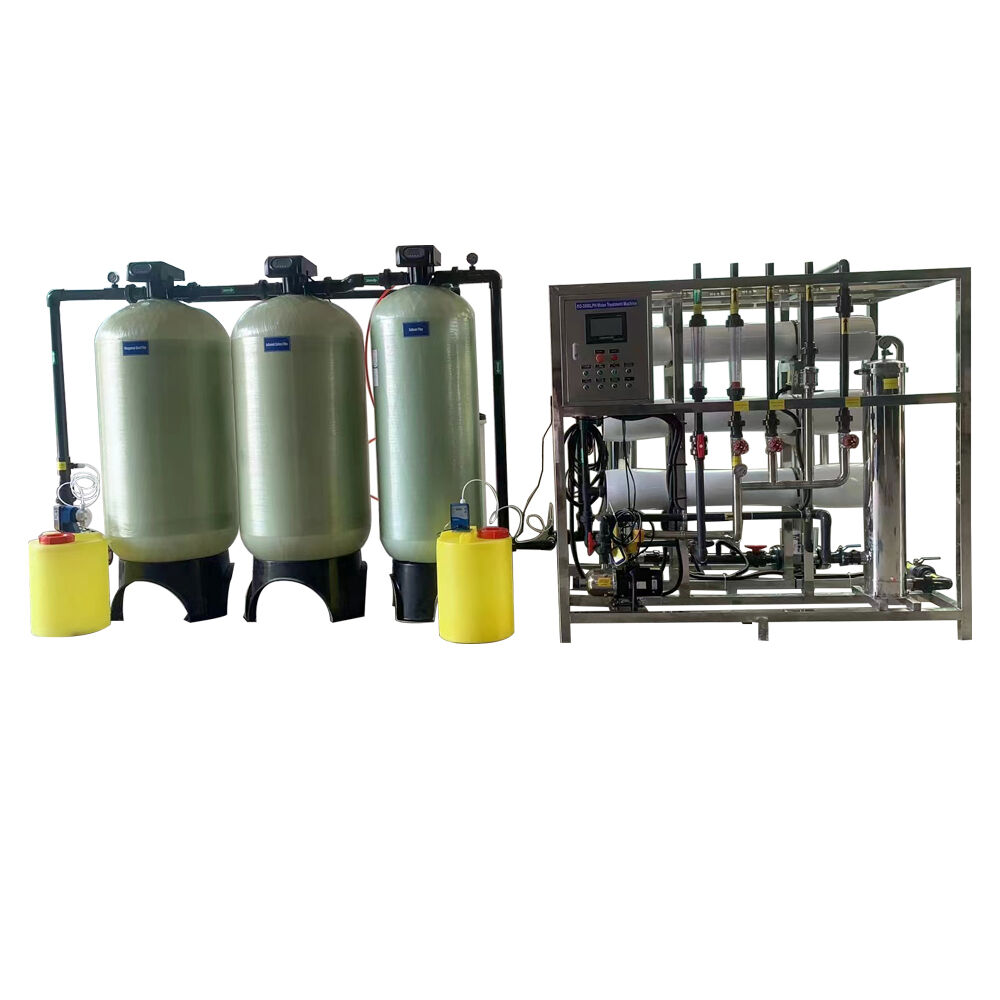
The modern water treatment technology is based on membrane separation technology, although some of the most widespread core technology in use are ultrafiltration (UF) and reverse osmosis (RO). The Guangzhou VOCEE Membrane Technology is a high tech firm providing the UF and RO system based on the diversity of the requirements of industries. The distinction between their major differences should be considered to select the suitable solution to the water treatment process. This blog will explain the differences between UF and RO.
Separation and Precision of Filtration Principle.
The basic difference between UF and RO lies in the processes of separation and filtration accuracy. The principle of ultrafiltration relies on a filtering principle that is driven by the hydrostatic pressure that separates the impurities by the size of the membrane pores. Its pore size usually falls between 0.01 and 0.1 micrometers that can trap macromolecules, colloids, bacteria, viruses and excludes small ions, water molecules and small organics of low molecules. On the other hand, the reverse osmosis is the method, which relies on the overcoming of the natural osmotic pressure and is applied in order to drive the water molecules through a semi-permeable membrane against the concentration gradient. With an ultra-fine size of 0.1 nanometers, which is a hundred times less than UF membranes, RO can eliminate more than 99% of dissolved salts, heavy metal ions, and even small organic molecules to produce nearly pure water.
Core Application Scenarios
The applications are used based on the degree of accuracy. The UF systems are better in pretreatment and intermediate purification. They are applied in water treatment as a mandatory pre-treatment of RO systems to remove suspended solids and microorganisms so as to reduce RO membrane fouling and extend its life. They are also used in large amount during purification of drinking water (to remove pathogens and leave beneficial minerals intact) and dairy protein separation in the food industry. Meanwhile, RO systems are more suitable in the situations, when it is necessary to have high-pure water. Its big applications are in desalination of sea and purification of ultra-pure water to be used in electronics and pharmaceutical sector, and the high quality drinking water purification in highly polluted water with heavy metals and water hard.
Custodial UF & RO Solutions of VOCEE.
VOCEE has full product lines of UF and RO that covers hollow fiber ultrafiltration membranes, RO systems and integrated solutions. The UF systems with high flux and anti-fouling membranes are the preferable models of VOCEE in the scenarios that demand pretreatment or water that has minerals. The high-rate of rejection of salt and other low-level impurities in its high-performance RO system are designed to be robust and effective in situations that demand high degree of purity of water. The staff at VOCEE professional staff customizes the system configurations based on the water quality, output requirements, and budget in such a way that the clients will be left to make the most suitable technology decisions.
In conclusion, UF and RO are a complementary not competing technologies. The choice between the two is based on a specific water quality goal and the need to use it. VOCEE has the experience in membrane separation technology and thus has the prospective of proposing an extremely integrated solution to its industries and help them achieve an effective and dependable water treatment.