Water quality directly impacts the quality of products, efficiency in production and the life of the equipment used in the production process in the industrial industry. The standards of water purification in the industry are thus designed to be highly stringent in terms of the elimination of pollutants, stability of the water and its safety. Reverse osmosis (RO) water purifier systems are considered as the best technology to achieve these high standards because they possess high-efficiency separation capacities, and thus they are being adopted as a core technology in the water treatment process. This paper delves into the ability of RO systems to purify industrial water to not only satisfy the needs of its intended and desired uses but also significantly surpass the desired purification standards in the industry.
Indicators of Standards of Water Purification in Industries.
Standards of industrial water purification differ minimally between different industries (electronics, pharmaceuticals and food processing) yet it is characterized by various basic indicators (total dissolved solids, TSS, turbidity, heavy metals in water, count of microbes and water hardness). The electronics industry as an example needs ultrapure water with a TSS of less than 10 ppm to prevent short circuiting of a circuit due to the presence of ionic impurities and the pharmaceutical industry needs to maintain a high level of microbial control to maintain the safety of their products. These standards do not only provide maximum points of harmful substances but also provide a consistent quality of water to avoid changes and consequently interfere with the production processes. The fundamental assumption about the application of RO systems in an industrial context is that these indicators must be met.
RO System Design: Industrial Standards Customized.
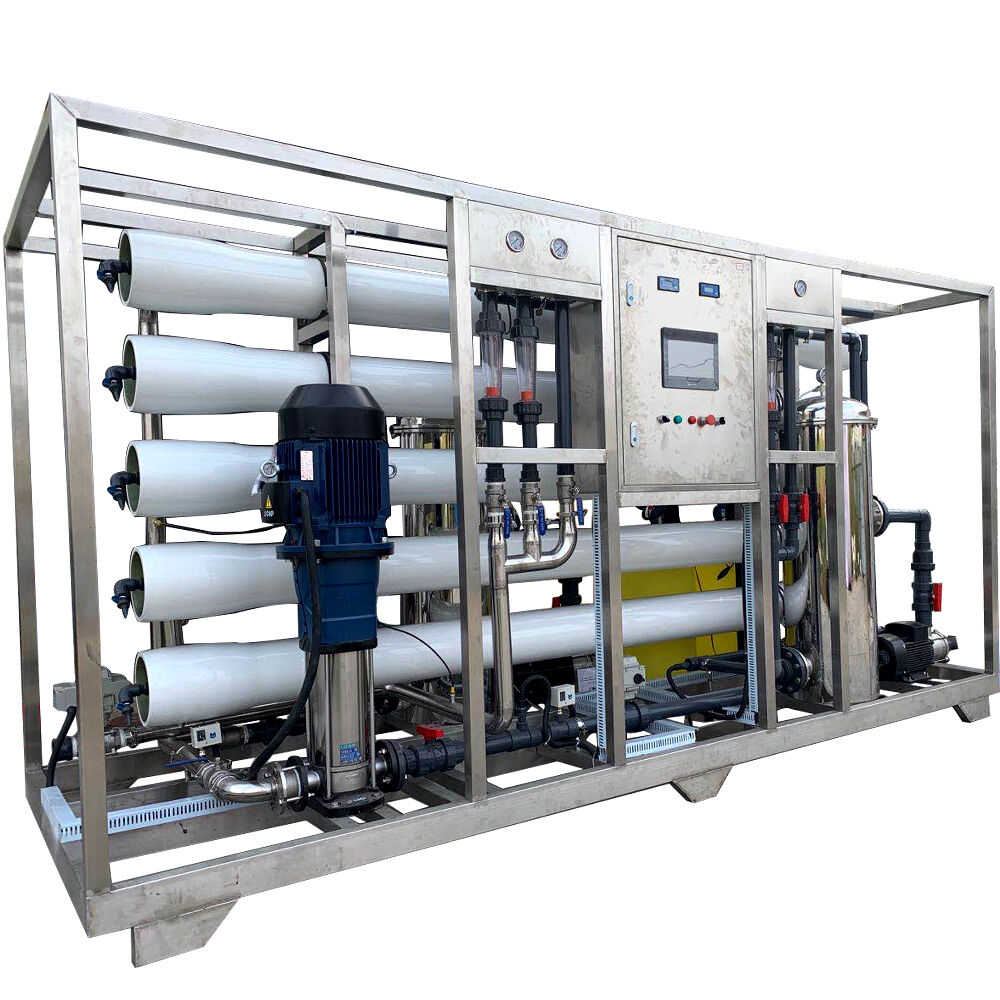
The main benefit of RO water purifier systems is the tailor made design that is aimed at satisfying the industrial standard. The core component is firstly high-performance RO membranes. The choice of membranes with the right rejections rates (typically more than 99 percent of typical dissolved salts) would guarantee the removal of the TDS and heavy metals. In processes where the turbidity is a critical factor, a multi-stage pretreatment process (sedimentation, filtration and ultrafiltration) is combined in front of the RO unit to eliminate turbidity to less than 0.1 NTU to avoid membrane fouling and maintain constant filtration efficiency. Secondly, the system design is maximized on water quality factors. As an example, softening unit is installed in places where the water is hard to prevent scaling on RO membranes which may decrease the effectiveness of separation and decrease the life cycle of membranes. Besides, the modular design enables RO systems to flexible processing capacity to meet the fluctuating water needs across different production levels of industries.
Compliance Check and Ongoing Control in the Industrial ROs.
The purification of water needed in the industries is not a single accomplishment but it must be constantly checked and managed. Quality providers of RO systems will provide actual monitoring equipment that will allow tracking such important indices as TDS, pH value, and flow rate. The devices are able to raise alarms and automatic changes when the indicators go out of normal levels to guarantee continuity of supply of qualified water. In addition to this, periodic maintenance of the system and inspection of membranes are important to ensure compliance in the long-term. Professional technical staff carry out periodic cleaning, replacement, and performance testing of RO membranes, the system should have high-efficiency operation and stay at the industrial standards. Third party testing and certification is also conducted to ascertain the compliance of the treated water in special industries that have a high necessity.
In summary: RO Systems - A Consistency in the Quality of Water in Industry.
The foundations of quality industrial production are the standards of water purification by industries and RO water purification systems are based on such factors as the high level of membrane separation and the design of the equipment and rigorous monitoring mechanisms that should be adhered to effectively fulfill the demands. VOCEE Membrane Technology is a high-tech company that focuses on membrane separation technology and incorporates R&D, production, and sales to offer customers personalized RO water purifier equipment and holistic solutions to different industries. VOCEE assists the enterprises to meet water quality requirements, mitigate risks in production, and encourage a green and efficient production by optimizing RO technology and achieving system stability continuously.